Event report
Amazon Week 2026
- June 2026
- Amazon Week, Berlin
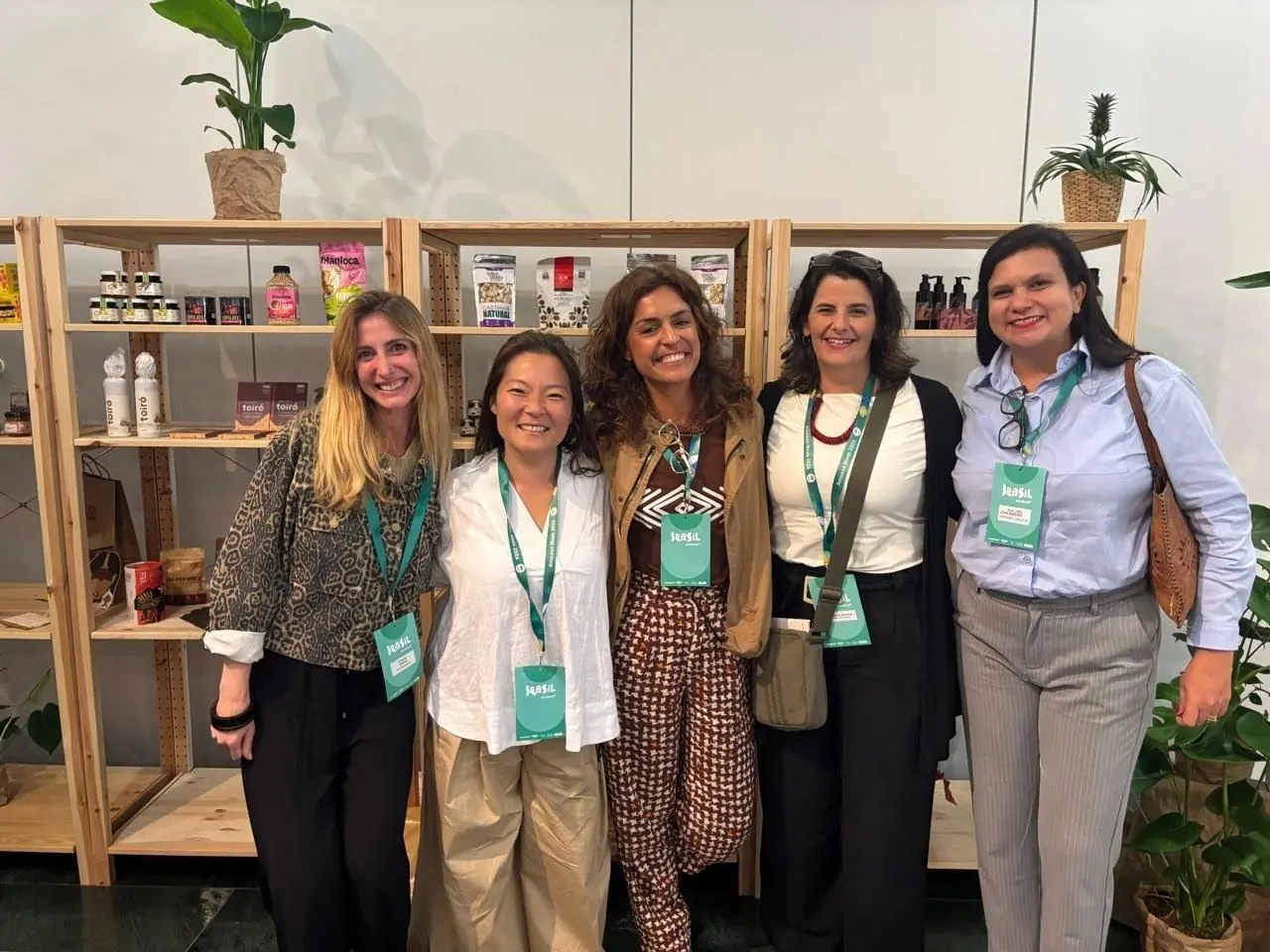
By Priscila Terenzi, Founder of Ka'a Harmony Foundation
I attended the first edition of Amazon Week Berlin back in 2023. At the time, I was someone who loved the Amazon and had just started creating bridges between projects & communities there with Germany, for example organising movie screenings in cultural venues, hosting storytelling events about sustainable tourism, trying to bring the Amazon into European conversations in whatever way I could. The first edition of Amazon week was intimate: a small hub, mostly people already deeply immersed in Amazonian issues, a few days of panels, that's all.
This year, I walked back in as a supporter, co-partner of the Brazilian Embassy in Berlin, and organiser of Ka'a Harmony's second panel. And what I saw genuinely moved me.
Amazon Week has grown into something remarkable. Five cities: Berlin, Brussels, London, Paris, and now Zagreb: five days of programming spanning bioeconomy panels, documentary screenings, Indigenous knowledge dialogues, Amazonian gastronomy, art exhibitions, and events for kids. The audience now includes politicians, climate finance professionals, civil society, NGOs, researchers, traditional community leaders, producers, and people who simply love the Amazon. This year's opening ceremony reflected exactly that range: Jochen Flasbarth (Germany's State Secretary), Carina Pimenta (Brazil's State Secretary for Bioeconomy), Martin von Hildebrand (Secretary General of ACTO), Camille Bemerguy (Secretary for Bioeconomy of Pará), and Gabriel Todt de Azevedo (Head of Amazon Coordination at the IDB) were all in the room. The numbers speak for themselves: deforestation in the Brazilian Amazon has fallen around 50% since Lula took office in 2023, and as Camille put it plainly: "the future of the bioeconomy runs through the Amazon." That mix of institutional weight and genuine urgency is rare. And it matters.
The panels matter. But the people matter more.
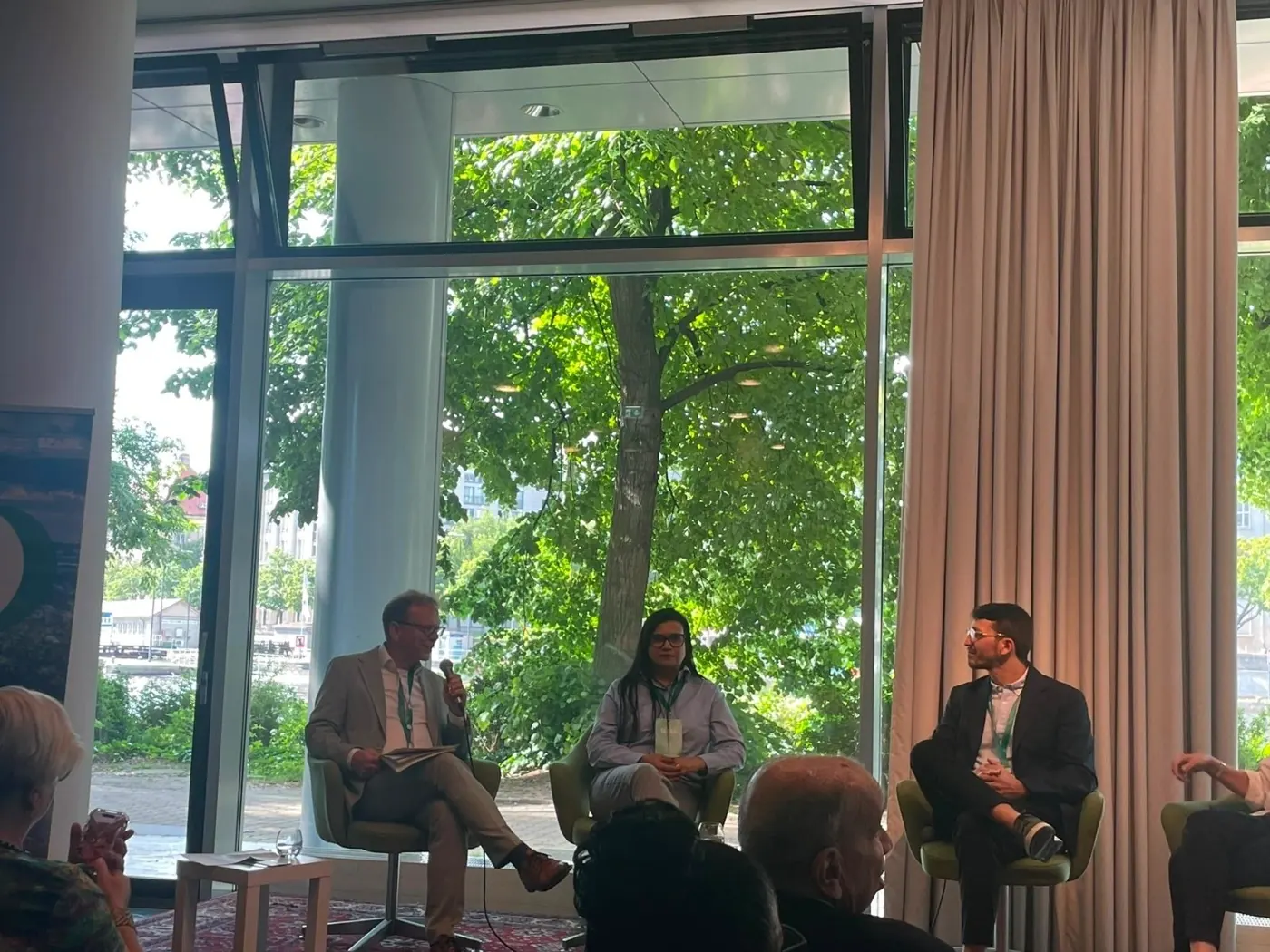
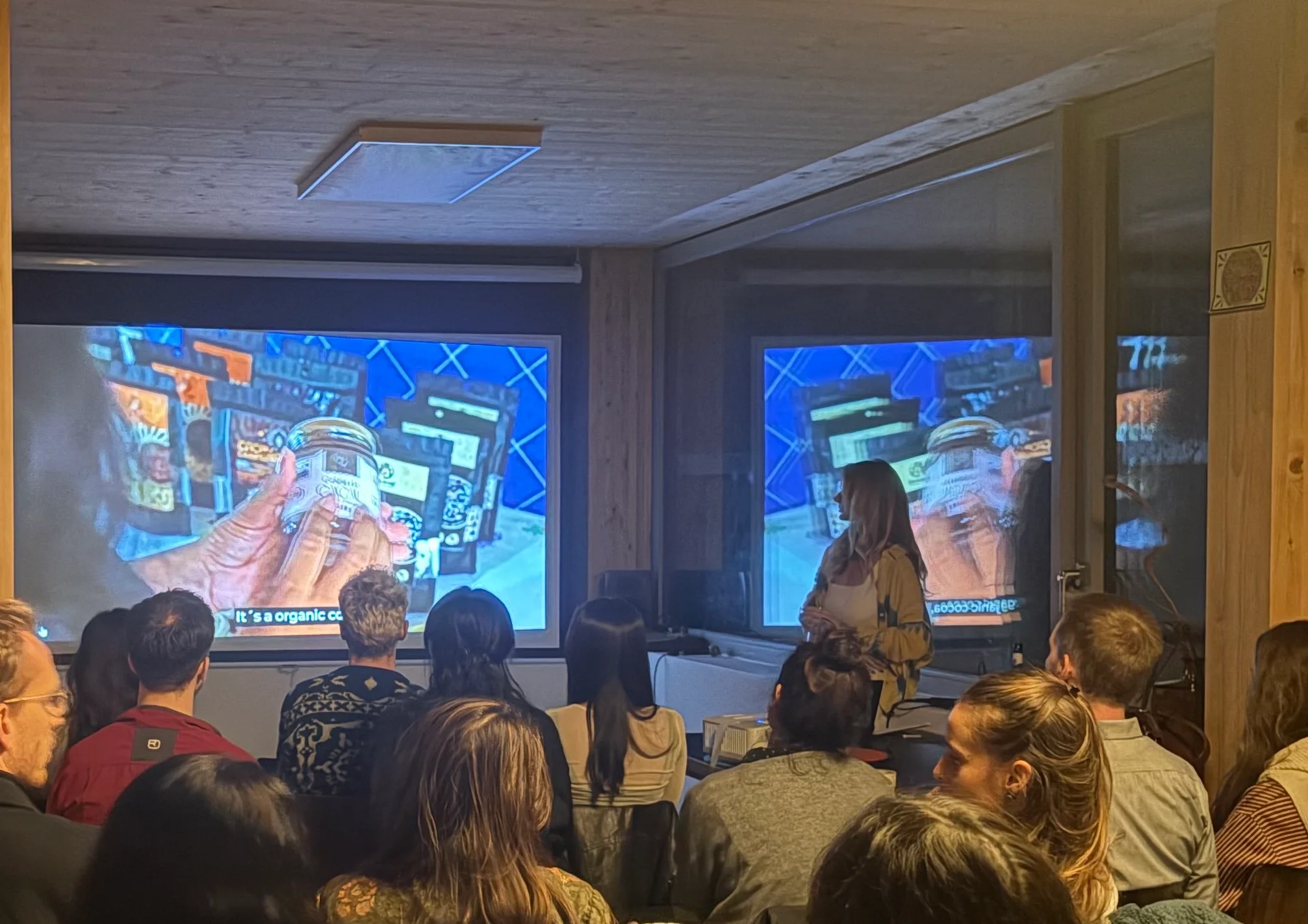
Ka'a Harmony hosted its second panel this year: Cocoa Bioeconomy: Conservation, Communities and Investment - a conversation that brought together researchers, investors, and practitioners to explore what it really takes to make cocoa a genuine engine of Amazon conservation.
The discussion was rich and grounded. Vinicius Ahmar from Instituto Arapyaú, who has spent years working across the Amazon and Atlantic Rainforest bioeconomy, spoke about what actually makes cocoa agroforestry economically viable for local communities, the instruments that connect stakeholders, enable market access, support livelihood diversification, and facilitate access to finance. Isabella Steeley, PhD researcher at the University of Sheffield and Yale, outlined the potential of combining cocoa agroforestry with enhanced rock weathering - an approach that can remove CO2 from the atmosphere, reduce greenhouse gas emissions, and restore soil micronutrients at the same time. And Mariane Chiapini from InPlanet highlighted Brazil's extraordinary natural conditions for this model, including its deposits of lime and basalt, and the growing potential of carbon credits based on rock weathering as a durable form of CO2 sequestration.
I'm grateful to Tim Wegenast for moderating, and to all three speakers for bringing that depth to the room. The conversation confirmed something Ka'a Harmony believes deeply: cocoa, done right, is not just a product, it's a conservation strategy.
The women behind the products.
What strikes me every time I'm at events like this is that behind every bioeconomy product, there is a woman whose resilience, creativity, and strength made it exist. These businesses have a soul because of them.
Vivian Chun founded MOMA Cosméticos Naturais, a cosmetics brand rooted in Amazon agroforestry, working directly with over 247 families across 14 municipalities in Amazonas and Pará. MOMA connects people and forests through products, and Vivian has been building that connection for years.
Amanda Santana has spent 12 years building TUCUM BRASIL, a bridge between traditional Amazonian art and the wider world, operating as both a marketplace and consultancy for Indigenous and community crafts. Materials like bio-leather made from cacao, wild latex, and fibres from manioc.
Andréa Abram co-runs Luisa Abram Chocolate, a family business that works exclusively with wild cacao harvested by riverside communities in standing Amazon forest. No plantations, no clearing. Each bar is named after the river where the cacao was grown - and the brand has become one of the most respected names in craft chocolate globally.
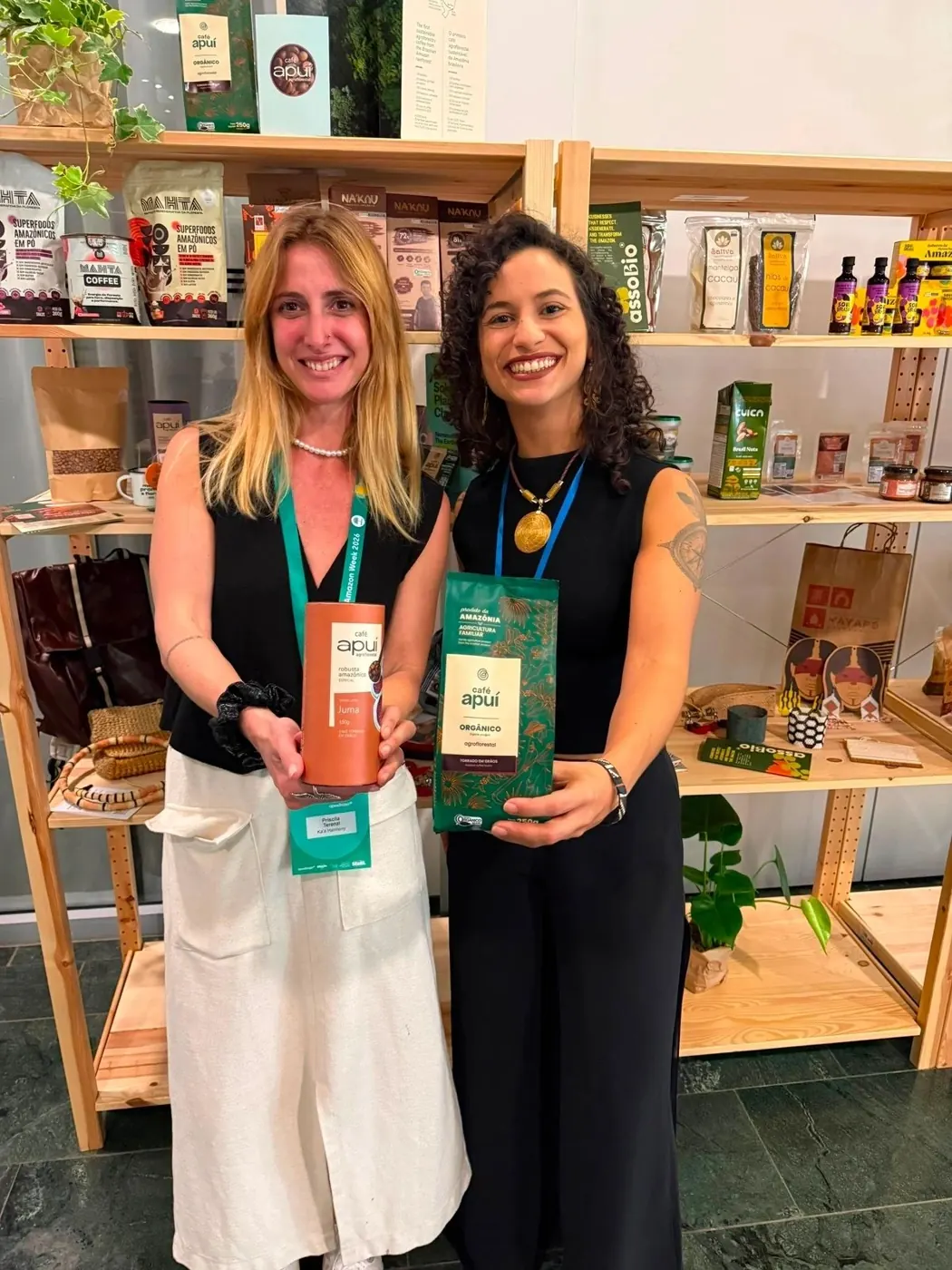
Sarah Sampaio, CEO of Amazônia Agroflorestal, leads Café Apuí, the first 100% organic Robusta coffee cultivated in agroforestry systems in the Brazilian Amazon. In a municipality where cattle ranching devastated the forest for decades, Sarah and her team are proving that a different model is not only possible, but good.
Bringing the Amazon to Berlin's market
This year, Ka'a Harmony facilitated concrete market access for Amazonian bioeconomy products in Berlin, in partnership with ASSOBIO and the Amazon Rainforest Investor Coalition.
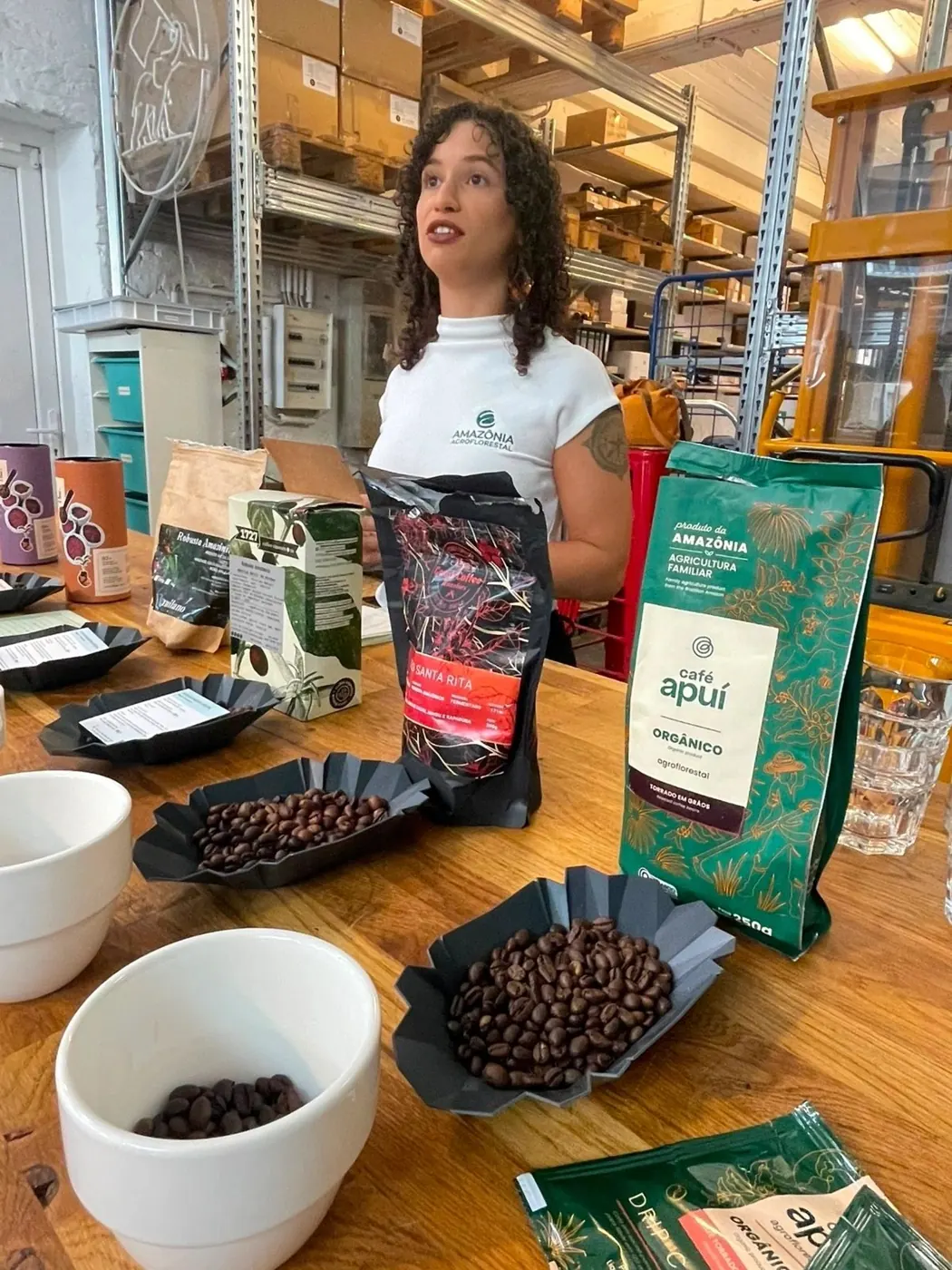
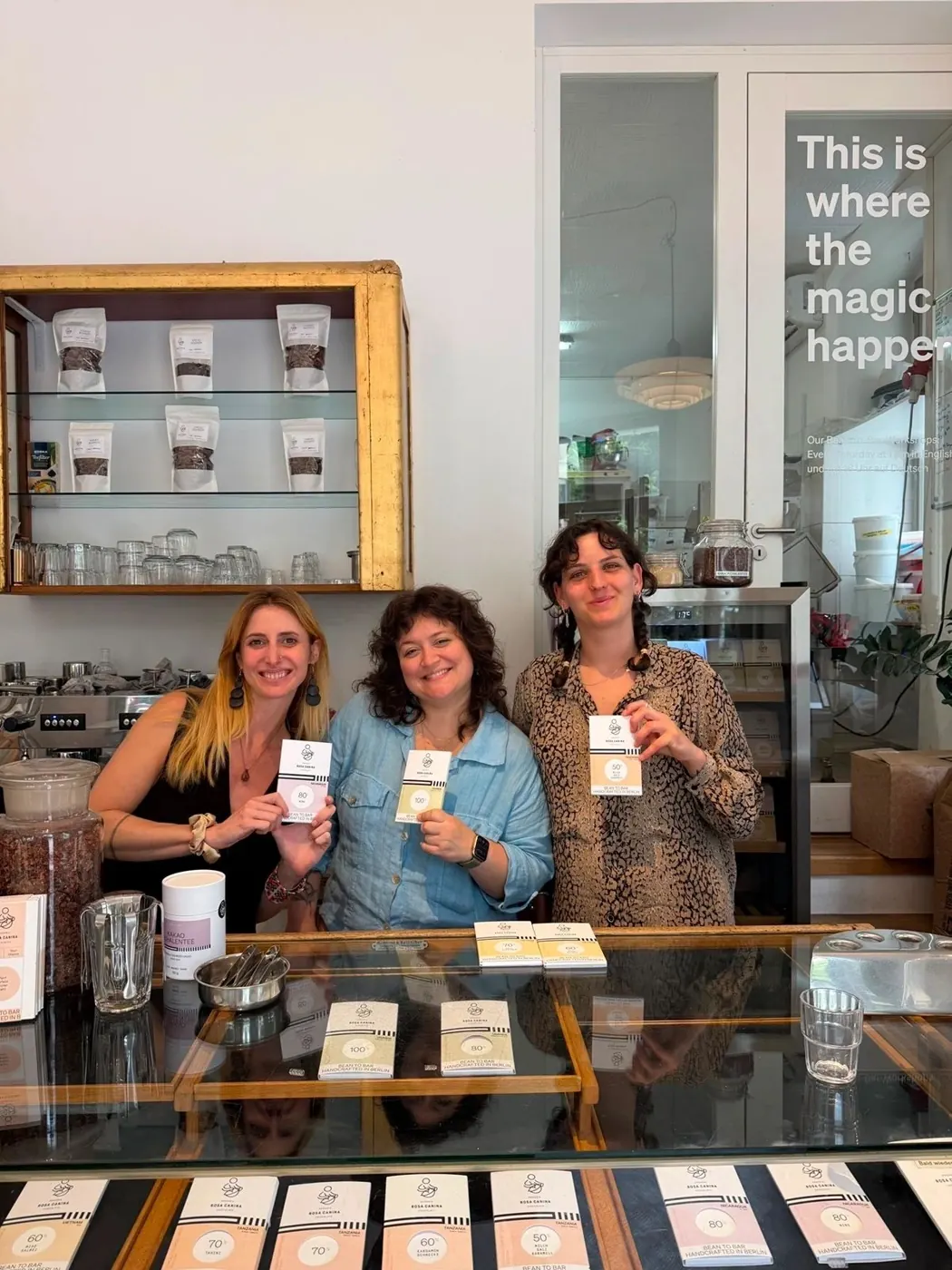
We organised a cupping of Café Apuí at Five Elephant, one of Berlin's most respected specialty coffee spaces, and supported a business meeting between Café Apuí and 19 Grams. For cacao, we facilitated meetings between Luisa Abram (and other Amazonian cacao producers) and two Berlin partners: Goodmood.de and Rosa Canina Chocolates. We also coordinated a technical visit to bio stores across Berlin for the broader producer delegation.
These are the beginnings of real relationships, the kind that can turn into sustained market presence for producers whose work deserves a shelf in Europe. It is something Ka'a Harmony wants to develop further, because connecting Amazonian bioeconomy products to European markets is one of the most tangible ways to make standing forests economically competitive.
What Amazon Week tells us
When I compare that first edition in 2023 to what I experienced this June, I see an event that has grown not just in size, but in depth and diversity of voices. The fact that it is now in five European cities is not just a programme decision, it is a signal that Europe's relationship with the Amazon is maturing.
The Amazon needs allies here. And events like this - where a Berlin coffee buyer can sit across from a producer from Apuí, where a Berlin chocolate shop can taste wild-harvested cacao for the first time - are where that alliance becomes real.
Ka'a Harmony will be back next year. 🌿