Ka’a Journal
Cocoa and the forest: when the cocoa bioeconomy really delivers
Cocoa can destroy forest – or keep it standing. A look at where cocoa comes from, its two faces, and what the bioeconomy in the Brazilian Amazon does differently.
- Bioeconomy
- Cocoa
- Women of the Amazon
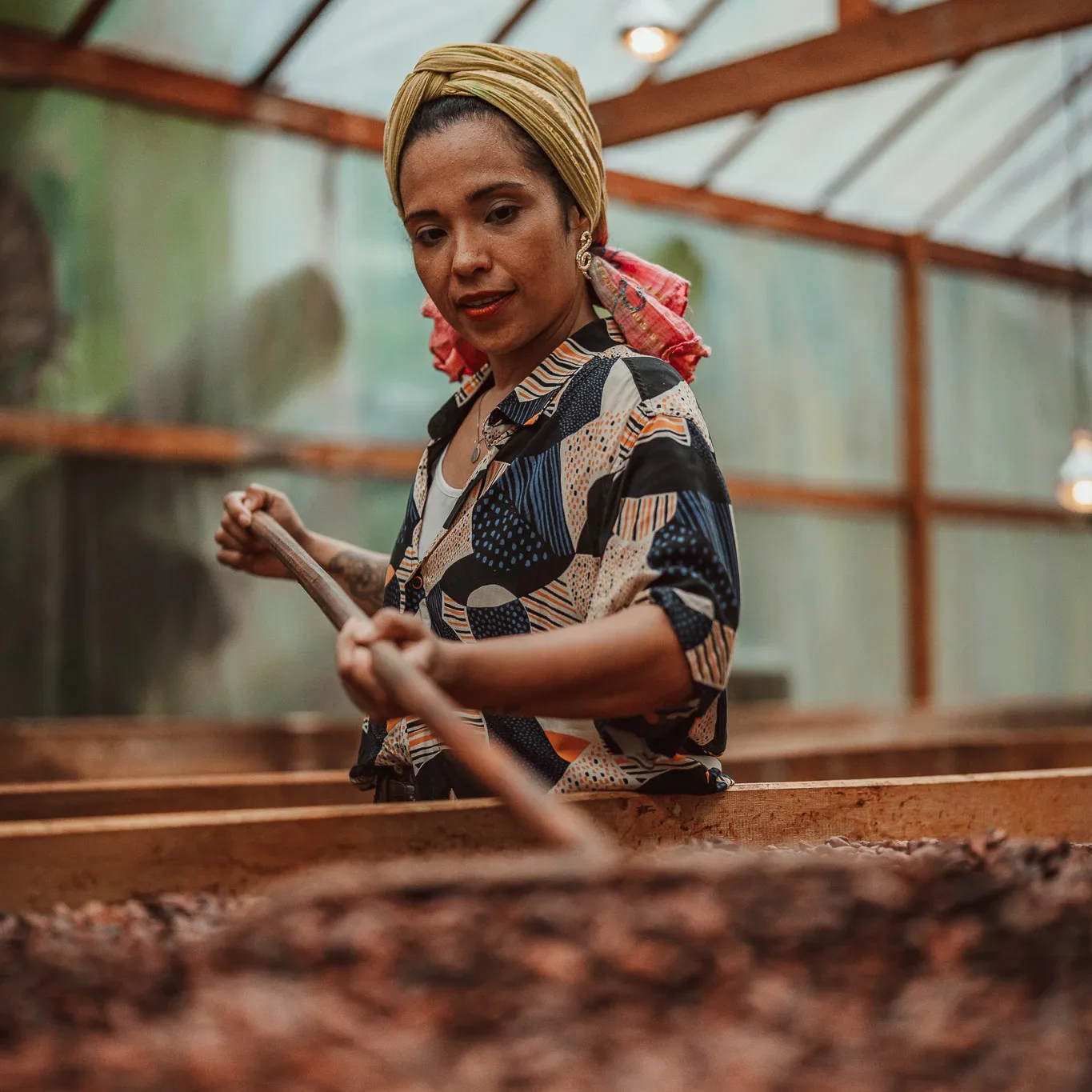
Under what conditions can the cocoa bioeconomy deliver for the forest, the climate and local communities? And what role do women play in making it work? This article explores these questions, drawing on women-led cocoa cooperatives in the Amazon.
Cacao: a gift from the Amazon
The cacao tree (Theobroma cacao, “food of the gods”) is native to the Americas, and its story begins in the Amazon:
- ~5,300 years ago: the earliest evidence of people growing and using cacao, in the upper Amazon (today’s Ecuador),
- ~4,000 years ago: it reaches Central America, where Maya and Aztec cultures drink it,
- 1580s: Spain starts bringing it to Europe,
- today: most cacao is grown in West Africa.
Indigenous populations in the upper Amazon still use cacao to make special drinks today. “Ceremonial cacao”, on the other hand, is partly a wellness-market term that comes mostly from Mesoamerican traditions.
Cocoa has two faces
The risk: cocoa is a major driver of tropical forest loss. In West Africa, which supplies much of Europe’s chocolate, it has been a leading cause of deforestation, especially in Côte d’Ivoire and Ghana.
A threat to itself: less forest means less rain, and rising temperatures shrink the land where cocoa can grow. The crop is eroding its own conditions.
The promise: cocoa grown in agroforestry systems, under shade trees, reduces heat stress and can keep forest standing while supporting livelihoods.
The catch: shade tree species also need to adapt to a changing climate.
Cacao in the Brazilian Amazon today
Pará: Brazil’s cacao heartland. About 46% of Brazil’s cacao comes from Pará, up from 14% in 2000. Bahia was long Brazil’s main cacao state, until the fungal disease witches’ broom halted its boom abruptly in 1989 – opening the way for another region. In Pará, the push began in the mid-1970s with the first state plan to develop cacao farming, run by the federal cacao agency Ceplac in the region along the Transamazônica highway (main municipality: Medicilândia). Pará’s cacao fund (Funcacau) and Ceplac’s work on disease-resistant seeds and clones helped, and production is still largely family farming. Cacao is native there, and Pará’s industry was younger and had room to expand. In 2016, Pará overtook Bahia as the country’s top producer.
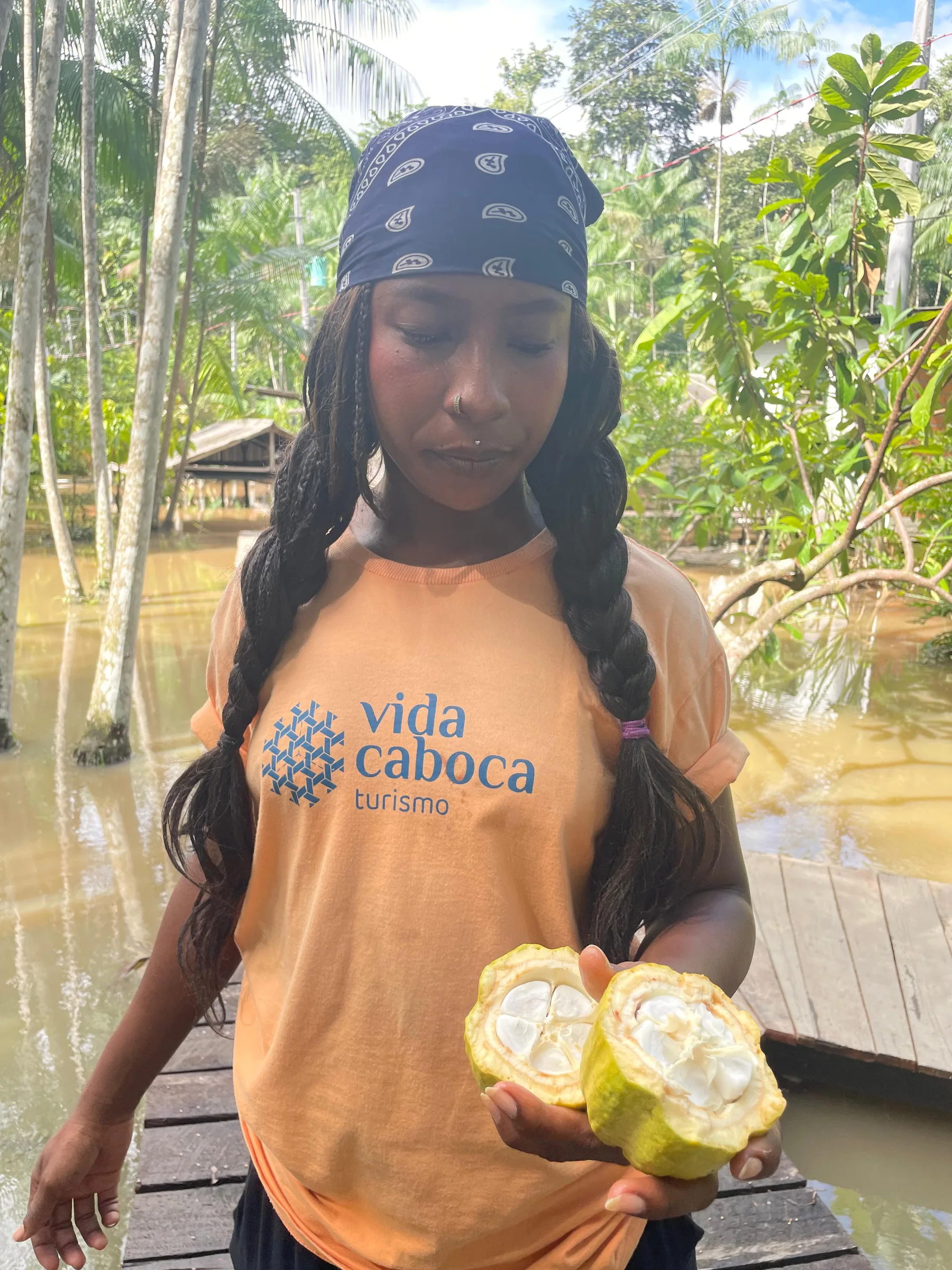
Grown with the forest, not instead of it. Native cacao grows in the shade of floodplain forests and agroforests, together with other native trees. More than 11,000 hectares in Pará grow directly under native forest cover.
A different pattern from West Africa. A state research study found that cacao in Pará mostly expands onto already cleared and degraded land, such as pasture, and is not a main driver of deforestation there.
Still fragile. The 2023–24 Amazon drought damaged cacao production, including in floodplain communities. Climate change remains the biggest risk.
A note on terms: várzea is freshwater floodplain forest on white-water rivers, igapó is on black-water rivers, and mangroves are coastal salt-water forests, a different ecosystem. Tidal várzea, near the Amazon mouth, is flooded by daily tides of mostly freshwater.
Why climate change hits Amazonian cacao
- Hotter and drier: climate projections for Pará point to rising temperatures and less rainfall, which could cut cacao productivity sharply.
- Extreme events: the record 2023–24 drought wilted crops across Pará and made the forest more flammable.
- Across the Amazon basin: models for Peru and Ecuador project less suitable land for cultivated cacao in the Amazon lowlands. In Colombia, wild cacao’s birthplace is under climate and deforestation pressure.
- Small producers carry the risk: forest-based systems are more resilient than plantations, but one extreme drought can still wipe out a year’s income for farmers.
Climate change is a threat to Amazonian cacao, and to the people who grow it.
Where your chocolate comes from matters
Among Germany’s top cocoa bean origins in 2024 were Côte d’Ivoire, Ecuador, Ghana, Nigeria and Cameroon (sources differ on the exact ranking). Côte d’Ivoire dominates: in 2023 it supplied 66% of the beans Germany bought from producing countries, and 89% together with Ghana, Cameroon and Nigeria. West and Central Africa therefore supply about 9 in 10 beans bought directly from producing countries.
The statistics hide part of the picture: many beans arrive through Dutch and Belgian ports. In 2024, the Netherlands was Germany’s biggest bean supplier by value – but those beans were grown elsewhere, so the true origin is hidden in the numbers.
Globally, Africa produces 71.5% of the world’s cocoa and the Americas 22.3% (ICCO 2024/25 forecast). The Amazon is a small share of that: Pará accounts for about 46% of Brazil’s cacao, and 11,444 of its 116,436 hectares grow under native forest cover. By our estimate, Pará is roughly 2–3% of world cocoa. A small share, but a big opportunity: forest-based cacao can show how it’s done right.
What’s behind your chocolate bar?
More and more manufacturers and retail brands are moving their cocoa to certification schemes, and some even grow it themselves in agroforestry or guarantee farmers a fixed price. That is an important step. Assessments of how far it goes, however, differ.
What the labels mean: Fairtrade guarantees a minimum price plus a premium for the community. Rainforest Alliance focuses on farming and environmental standards, with a small premium but no minimum price. Labels help, but none guarantees a forest-friendly bar. That’s why origin matters.
Even the brands that do well mostly buy West African and Central American cocoa. Amazonian, forest-based, women-led cacao is the exception – and that is what we care about.
The women who make the difference
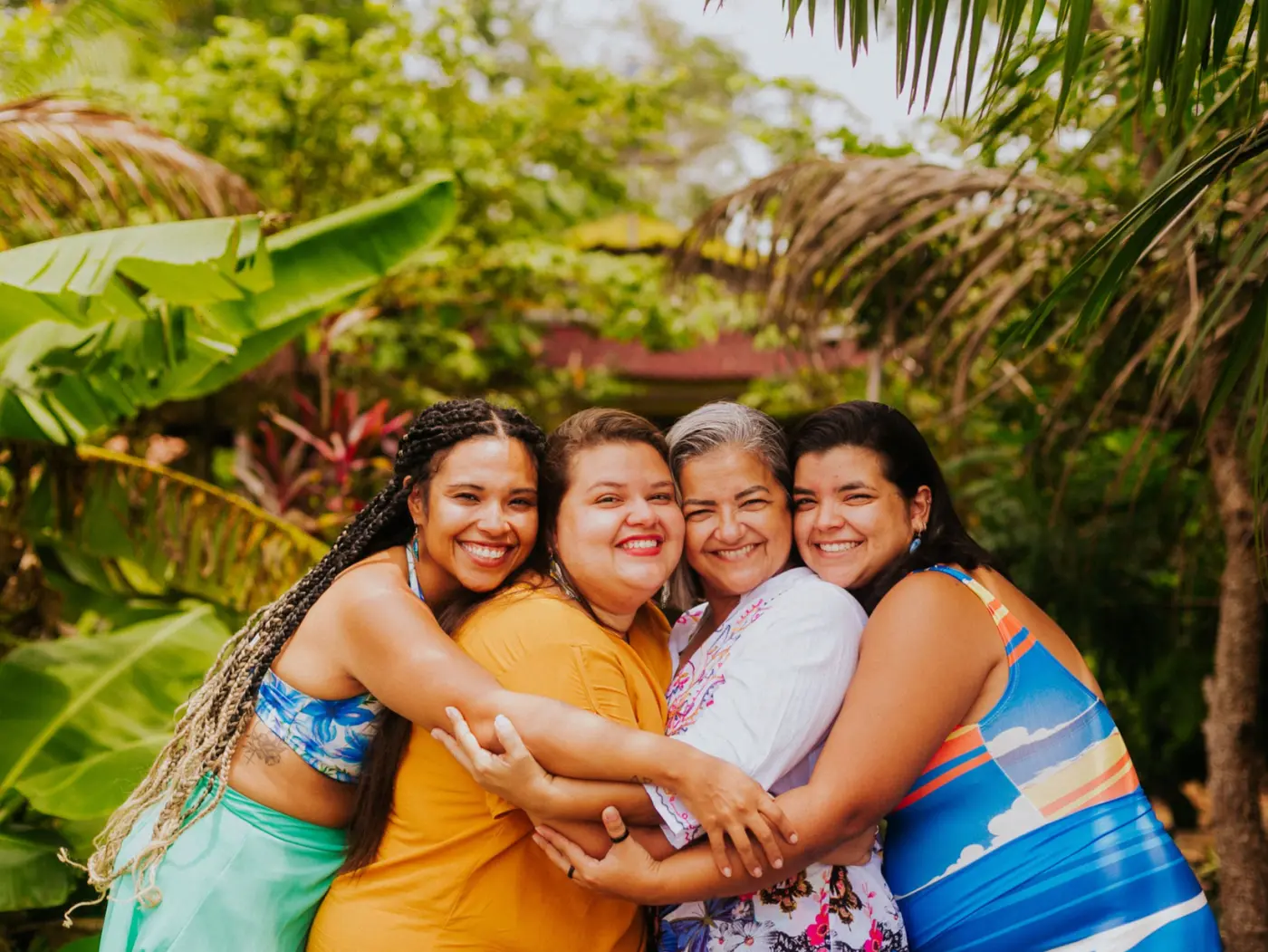
Behind every product is someone who makes it possible – in cocoa, often a woman. Dona Nena (Izete Costa) has made chocolate from native cacao since 2006 on the river island of Combu near Belém, harvesting, fermenting, roasting and grinding it herself in standing forest, with staff chosen first from the island: Filha do Combu. In Mocajuba (Pará), Noanny Maia, her sisters and her mother carry on her grandfather’s legacy as the fourth generation: since 2021, Cacauaré has bought várzea cacao from more than 30 riverine, Indigenous and Quilombola families (descendants of escaped enslaved people), turning it into chocolate and ceremonial cacao and protecting more than 500 hectares of native forest – more in our Newsletter #2. Luisa Abram Chocolate works exclusively with wild cacao harvested by riverside communities in standing forest, and Warabu is also one of our cocoa partners. What they share: the forest stays standing, and the value stays local. We discussed how this can work at our cocoa bioeconomy panel – read about it in the report on Amazon Week 2026.
Women, income and a say
A study by Tropenbos International (2025) in Pará and Acre shows how much this matters:
- 60% of household income now comes from women’s work in forest-based businesses.
- 16% of that income is invested in productive assets, such as açaí processing and beekeeping.
- Women also reported more confidence and a stronger say in decisions.
Forest-based businesses can be a route to independence – for women and for the forest.
Partner with us – for cocoa from the forest
Do you work in the cocoa and chocolate industry – as a manufacturer, trader, buyer or investor? We connect women-led cocoa initiatives in the Amazon with partners in Europe: with market access, tastings, business meetings and conversation formats that turn contacts into supply relationships. Partner with us or stay in the loop with our newsletter.