Ka’a Journal
Mamirauá: the reserve that changed conservation in Brazil
More than a million hectares of flooded forest, home to river dolphins and manatees – and the first area in Brazil where people and nature are protected together.
- Our projects
- Protected areas
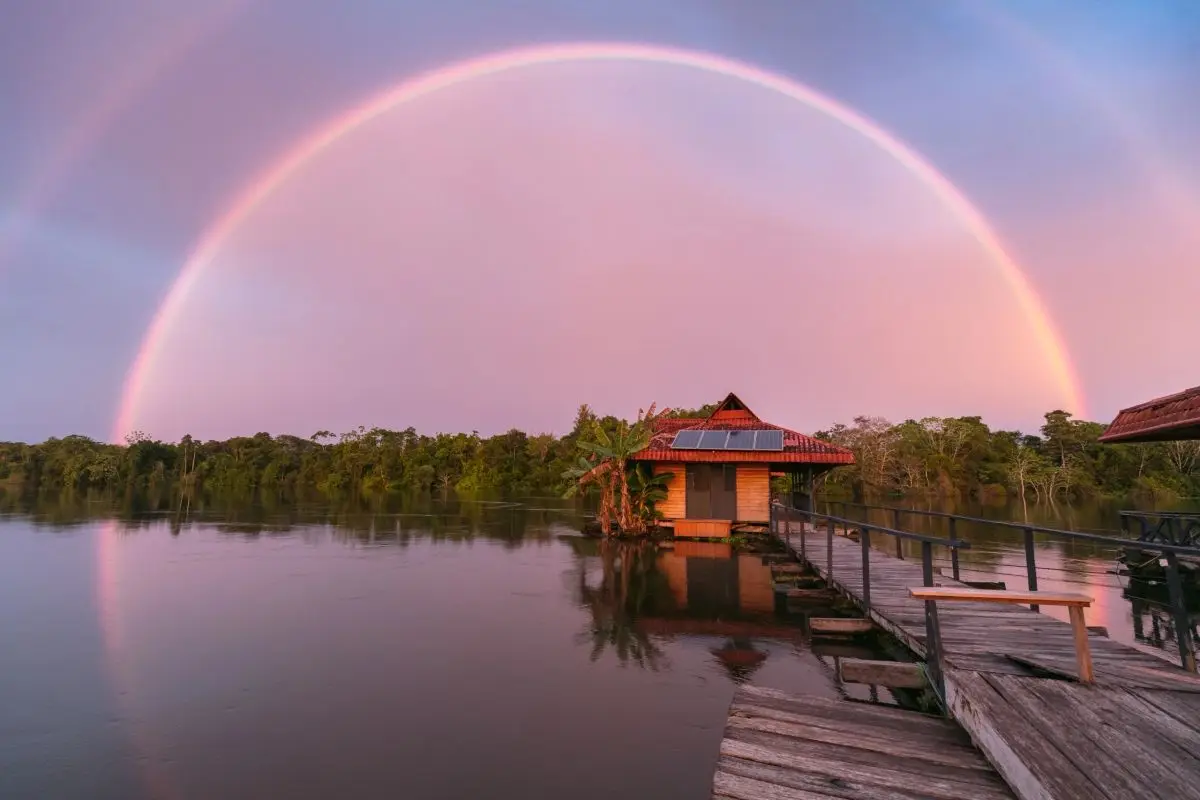
Some 600 kilometres west of Manaus, where the Solimões and Japurá rivers meet, lies one of the most unusual protected areas in the world. For several months a year, the forest here is under water. Boats replace paths, fish swim between the treetops, and people’s houses stand on stilts or float.
A forest that breathes
Mamirauá is a várzea – a flooded forest that rises and falls with the river every year. The reserve covers around 1.1 million hectares and has been recognised as a wetland of international importance under the Ramsar Convention since 1993. It is home to more than 400 bird species and around 45 mammal species, including the bald uakari, the black-headed squirrel monkey, the Amazonian manatee and the pink river dolphin.
The idea that changed everything
Mamirauá was first designated in 1990 as a classic ecological station – without people. But the researchers working here, mainly to protect the uakari, soon realised that protection would not work without the people who have lived in this forest for generations. So in 1996, Mamirauá was re-established as Brazil’s first “sustainable development reserve” – a category that combines conservation, sustainable use and research.
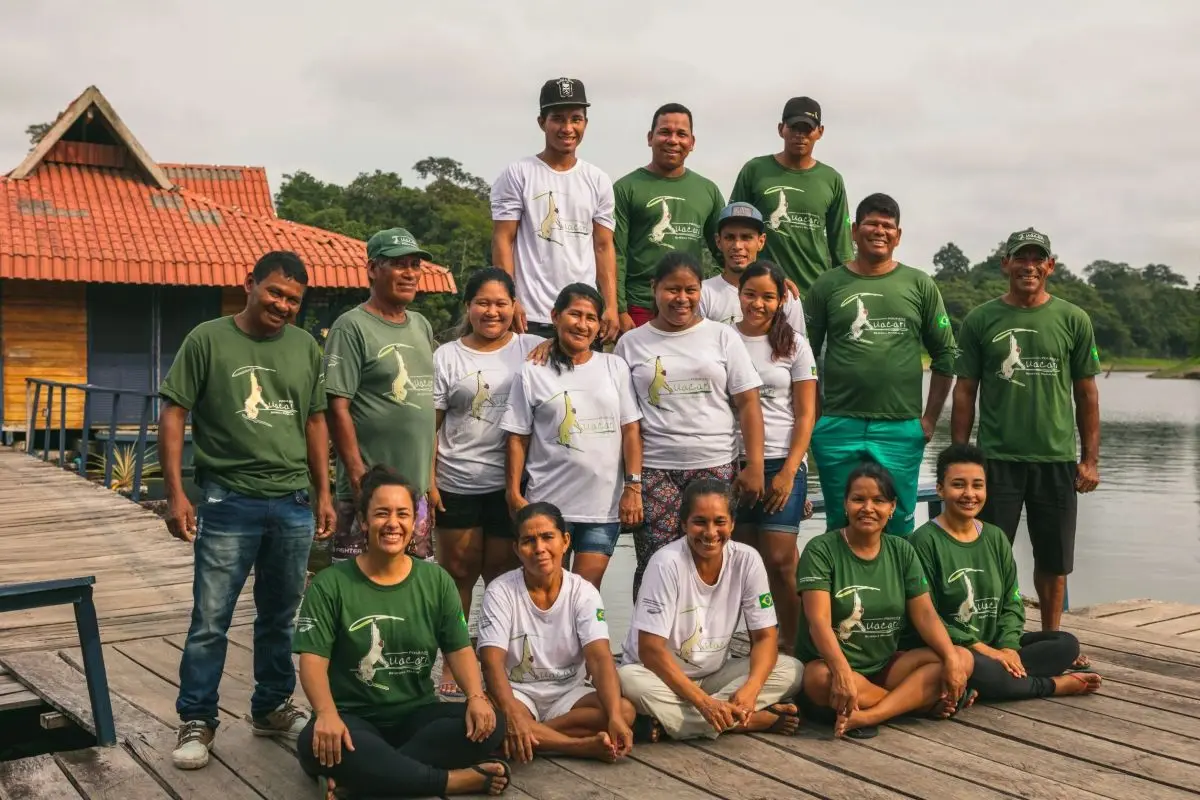
- Ribeirinhos – the riverside population – take part in data collection and have a say in how their lakes and forests are used.
- This is where pirarucu management began, a model now spreading across the Amazon.
- Instituto Mamirauá supports the communities scientifically and runs Uakari Lodge together with them.
Mamirauá has shown that people are not the forest’s problem – they are its best allies.
Why Mamirauá matters so much to us
Almost everything Ka’a Harmony stands for can be seen in Mamirauá: community-led conservation, income from intact nature, research that works with people rather than about them. We keep telling this story in Europe and connect local initiatives with partners who want to strengthen such models.