Ka’a Journal
Protection through value creation: what the Amazon can learn from Namibia
In Namibia, communities earn money because wildlife is alive – and protect it for that reason. A model that can work in the Amazon too, once adapted to the forest.
- Bioeconomy
- Ecotourism

For a long time, conservation followed a simple recipe: put up a fence, keep people out. This “fortress conservation” created conflict in many places – because those excluded from nature have little reason to protect it. Namibia took a different path, and it deserves a closer look.
Namibia: when wildlife becomes income
Since a legal reform in the mid-1990s, communities on communal land can form so-called conservancies. This gives them rights over the wildlife on their land and lets them sign contracts with lodges and tour operators. Elephants that once mainly destroyed crops became a source of income.
- Around 86 to 87 conservancies now manage some 166,000 km² – about 20% of Namibia’s land area.
- In 2023, conservancies received cash and in-kind benefits of around 166 million Namibian dollars, roughly two thirds of it from tourism.
- Community conservation supports more than 2,300 jobs – as rangers, guides, in lodges and in management.
To be honest: a large share of revenue also comes from regulated trophy hunting – over some periods even more than from tourism. The model is not a fairy tale but a compromise – one that works: wildlife populations have recovered in many regions, and land was not converted to farmland.
The principle behind it
Those who make a living from intact nature protect it better than any fence.
What matters is not tourism itself but ownership: local people have a say and benefit directly. That makes intact nature economically more valuable than its destruction.
And in the Amazon?
Big Five safari tourism cannot simply be transferred to the rainforest – animals are harder to spot in dense forest and distances are vast. But the principle works here too, in its own form:
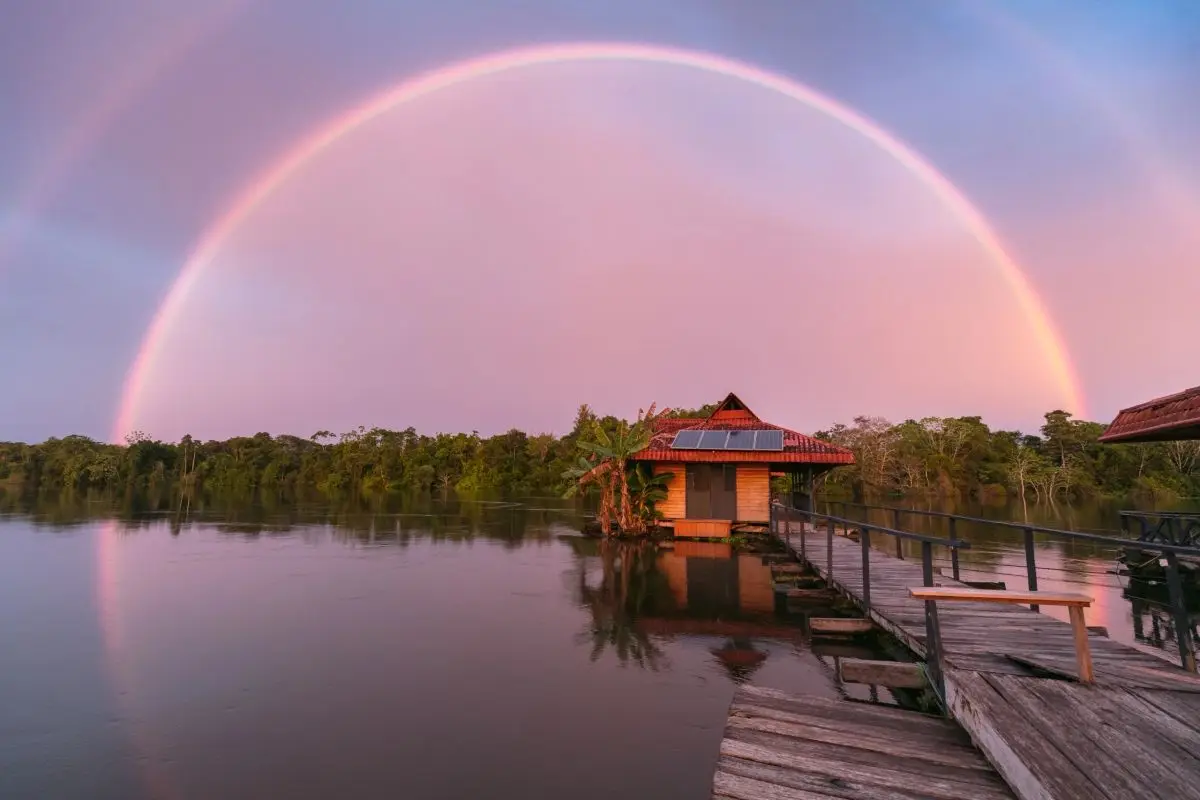
- Community-based ecotourism: Uakari Lodge in the Mamirauá reserve is run together with local communities and benefits eleven of them. Local guides show visitors their forest – and earn from it.
- Sustainable resource use: in pirarucu management, fishers count the stocks and may only catch a small share. The fish become a “high-interest savings account” (more in our pirarucu article).
- Bioeconomy: fruits, nuts, oils and fish from intact forest, processed locally and sold fairly, create income without clearing.
What it takes
Such models do not emerge by themselves. They need secure land rights, start-up capital, market access – and partners who listen. That is where Ka’a Harmony comes in: we connect initiatives in the Amazon, often led by women, with foundations, companies and people in Europe who want to make protection through value creation possible.